what is the purpose of ftir analysis Ftir analysis & spectroscopy
Hey there, fellow science enthusiasts!
Today, we are diving into the fascinating world of FTIR analysis and spectroscopy. Prepare yourselves for an enlightening journey into the realm of molecular vibrations and spectra. So, grab your lab coats, put on your safety goggles, and let’s get started!
FTIR Analysis
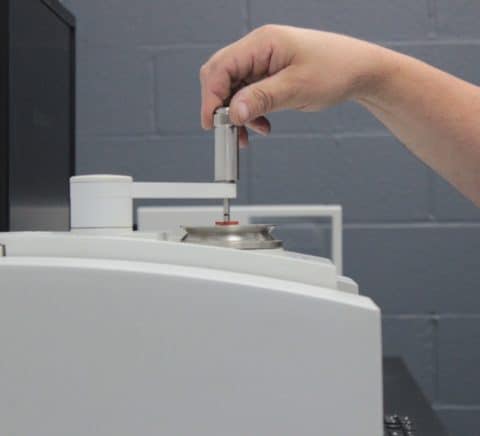 FTIR, which stands for Fourier Transform Infrared, is a powerful technique used to analyze and identify chemical compounds based on their unique infrared absorption spectra. It involves the use of infrared radiation, which interacts with the molecular vibrations of the sample being analyzed. By measuring the absorption of infrared light at different wavelengths, we can obtain a spectrum that reveals valuable information about the sample’s composition.
One of the key advantages of FTIR analysis is its versatility. It can be applied to a wide range of samples, including liquids, solids, and gases. This makes it an invaluable tool in various industries, such as pharmaceuticals, food and beverages, environmental monitoring, and forensic science.
How Does FTIR Spectroscopy Work?
 Now, let’s take a closer look at the process of FTIR spectroscopy. It all begins with the sample being prepared for analysis. The substance is typically ground into a fine powder and mixed with a spectroscopic-grade salt, such as potassium bromide (KBr). This mixture is then pressed into a pellet or placed between two salt plates.
Once the sample is ready, it is placed in the FTIR spectrometer. Infrared light is passed through the sample, and the amount of light absorbed at different frequencies is measured. This absorption spectrum is a representation of the energy absorbed by different molecular vibrations within the sample.
The resulting spectrum provides valuable information about the functional groups present in the sample. Different functional groups exhibit characteristic absorption peaks at specific wavelengths, allowing us to identify the compounds present. By comparing the obtained spectrum with reference spectra in databases, scientists can determine the composition of the sample with remarkable accuracy.
Furthermore, FTIR spectroscopy can also be used to analyze the composition and purity of compounds, monitor chemical reactions, detect impurities, and even identify unknown substances. Its non-destructive nature makes it an ideal analytical technique, as it allows samples to be analyzed without altering or damaging them.
So, whether you are a chemist, a biologist, or simply someone eager to explore the mysteries of the molecular world, FTIR analysis and spectroscopy will surely captivate your scientific curiosity. It is a powerful tool that enables us to unravel the hidden secrets contained within the molecules that surround us.
Remember, the next time you come across an FTIR spectrum, take a moment to appreciate the incredible depth of knowledge it holds. Each peak on that graph tells a story about the molecular structure and composition of the analyzed substance.
Keep exploring, keep questioning, and keep pushing the boundaries of scientific understanding!
If you are looking for Chemical changes in hydrothermal treated wood: FTIR analysis of you’ve came to the right place. We have 5 Images about Chemical changes in hydrothermal treated wood: FTIR analysis of like Ftir Analysis Ftir Spectroscopy – Otosection, Ftir Spectroscopy Blog Posts | Innovatech Labs and also Infrared (IR) Spectroscopy- Definition, Principle, Parts, Uses. Here it is:
Chemical Changes In Hydrothermal Treated Wood: FTIR Analysis Of
 vdocuments.mxFtir Analysis Ftir Spectroscopy – Otosection
madonna.dixiesewing.comInfrared (IR) Spectroscopy- Definition, Principle, Parts, Uses
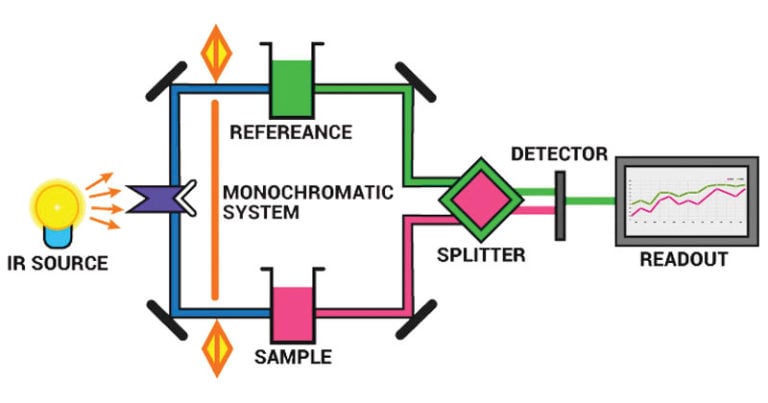 microbenotes.cominfrared spectroscopy spectrometer spectrophotometer instrumentation microbenotes
Ftir Spectroscopy Blog Posts | Innovatech Labs
 www.innovatechlabs.comftir spectroscopy manufacturing fourier control ranging
FTIR Analysis & Spectroscopy | ACE Laboratories
www.ace-laboratories.comChemical changes in hydrothermal treated wood: ftir analysis of. Ftir spectroscopy manufacturing fourier control ranging. Infrared spectroscopy spectrometer spectrophotometer instrumentation microbenotes